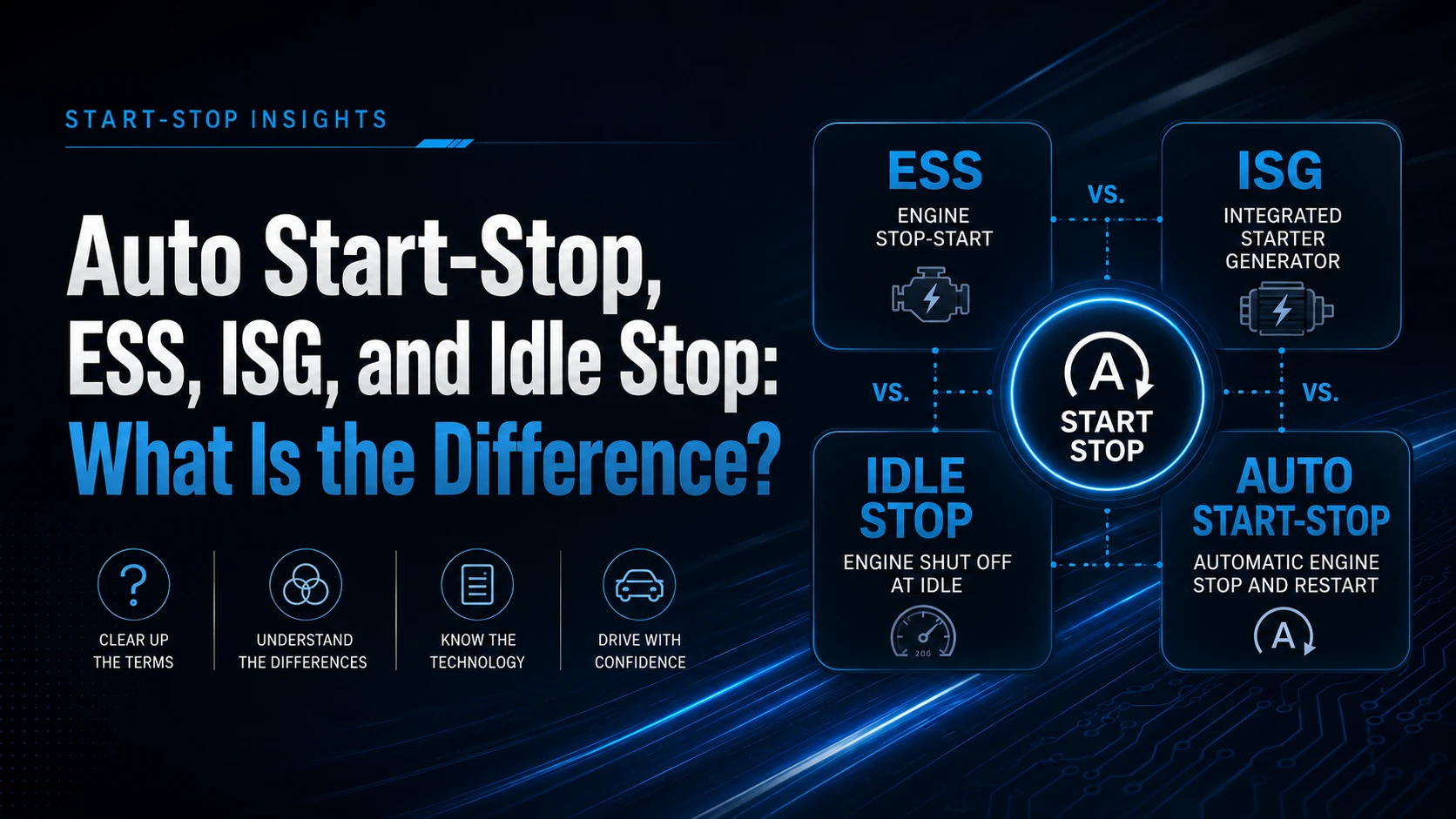
Drivers searching for start-stop accessories may encounter several different terms:
- Auto Start-Stop;
- Auto Stop-Start;
- Engine Stop/Start;
- ESS;
- ISG;
- Idle Stop;
- Automatic Engine Stop;
- Stop and Start System.
These names generally refer to a similar function.
When the vehicle comes to a complete stop and operating conditions are suitable, the engine may temporarily shut down. It restarts when the driver releases the brake pedal, presses the accelerator, selects a gear, or performs another model-specific action.
Why the Engine Does Not Always Stop
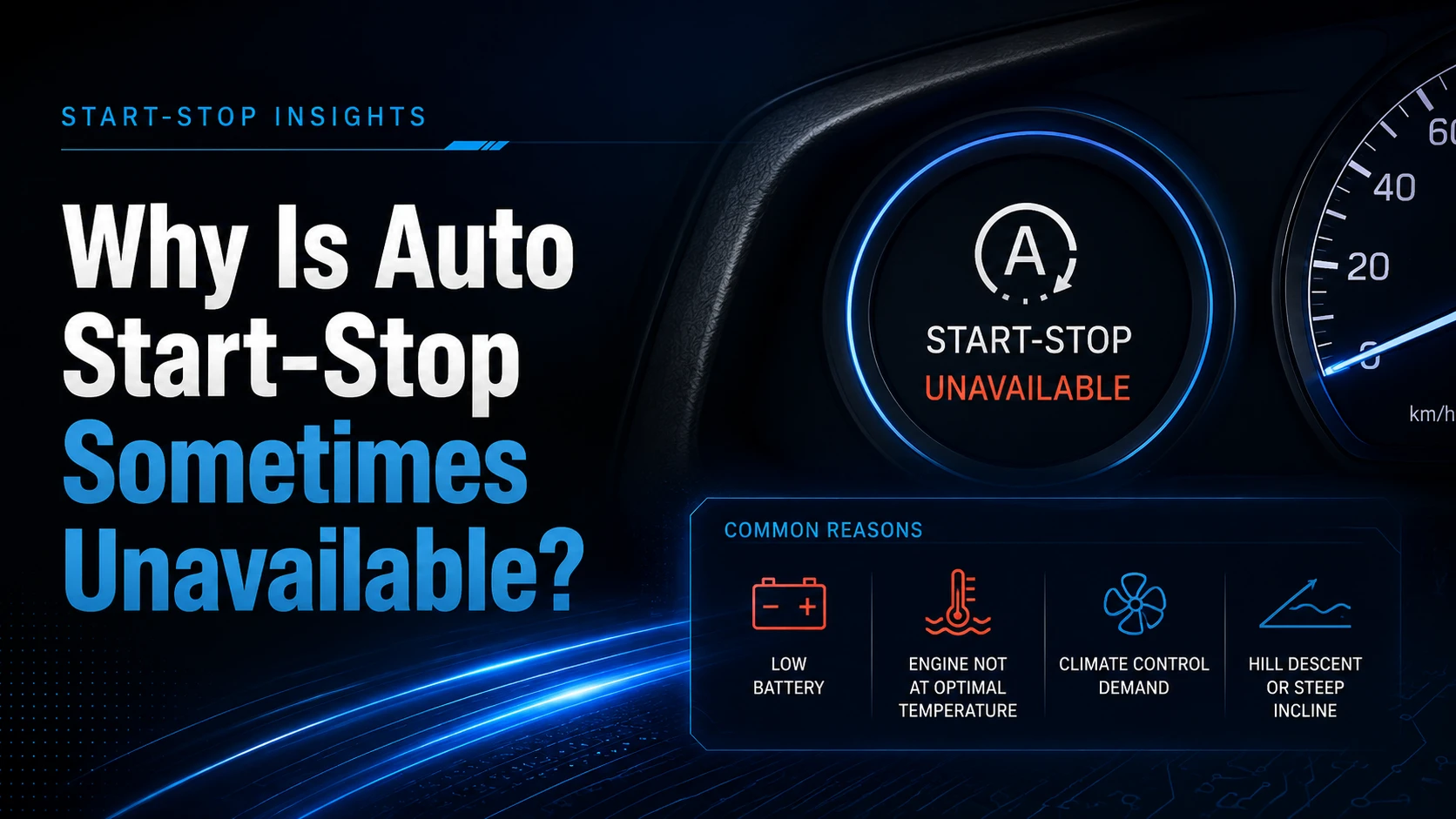
Automatic start-stop systems operate only when certain conditions are met.
The engine may remain running when:
- The battery charge is low;
- The battery is being recharged;
- The engine has not reached operating temperature;
- Cabin heating or cooling demand is high;
- The steering wheel is turned sharply;
- The vehicle is on a steep incline;
- The driver’s seat belt is unfastened;
- A door or hood is open;
- The vehicle is in a special drive mode.
These conditions vary by manufacturer and model.
Similar Names Do Not Mean Universal Compatibility
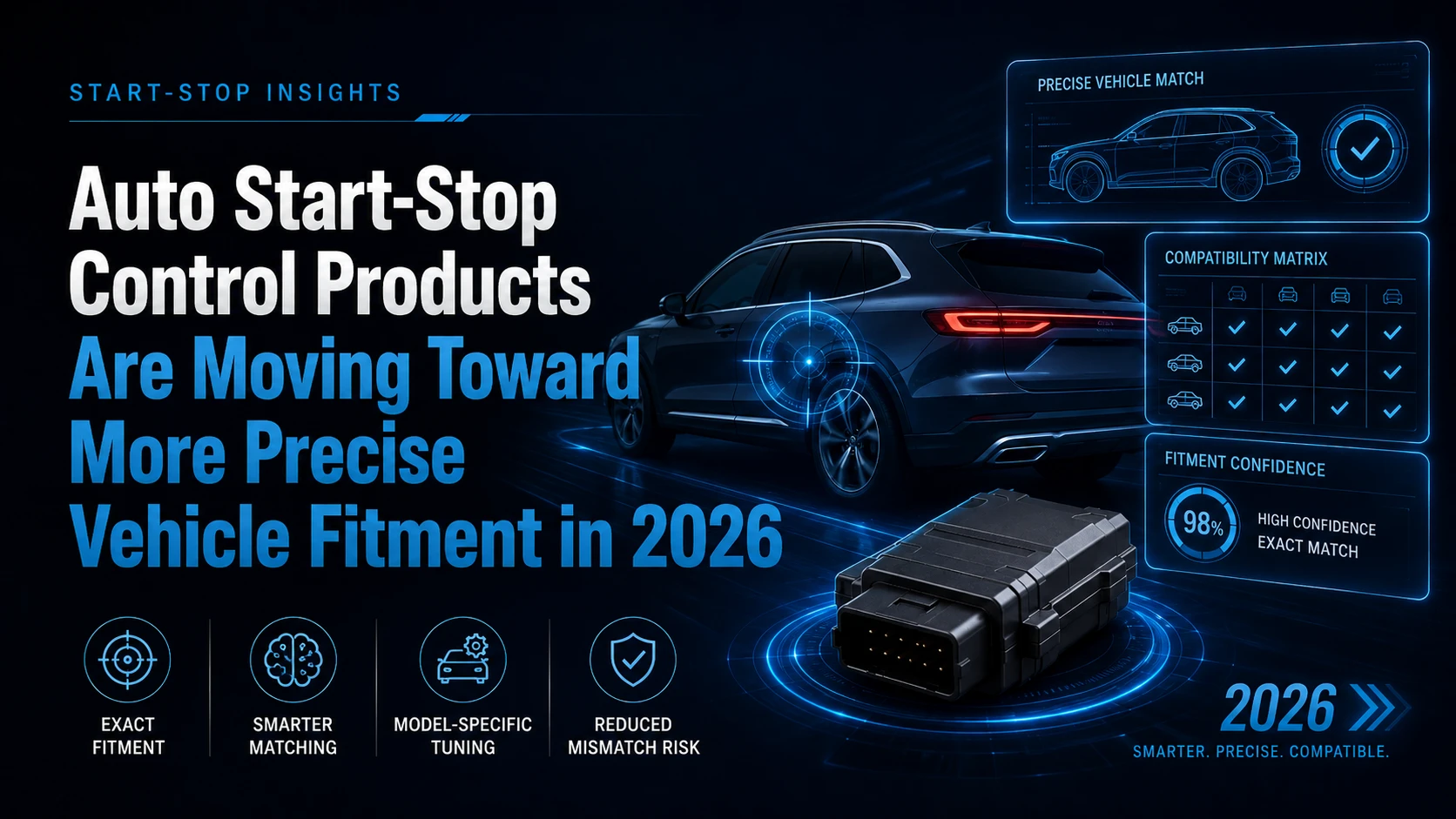
Two manufacturers may use similar terms for their start-stop systems, but the electronic control logic, button design, connector type, and installation location may be completely different.
A module designed for one vehicle cannot be assumed to work with another vehicle simply because both systems are called ESS or ISG.
Before purchasing a product, confirm:
- The vehicle is equipped with an automatic engine stop-start system;
- The vehicle has a factory method for temporarily turning the system off;
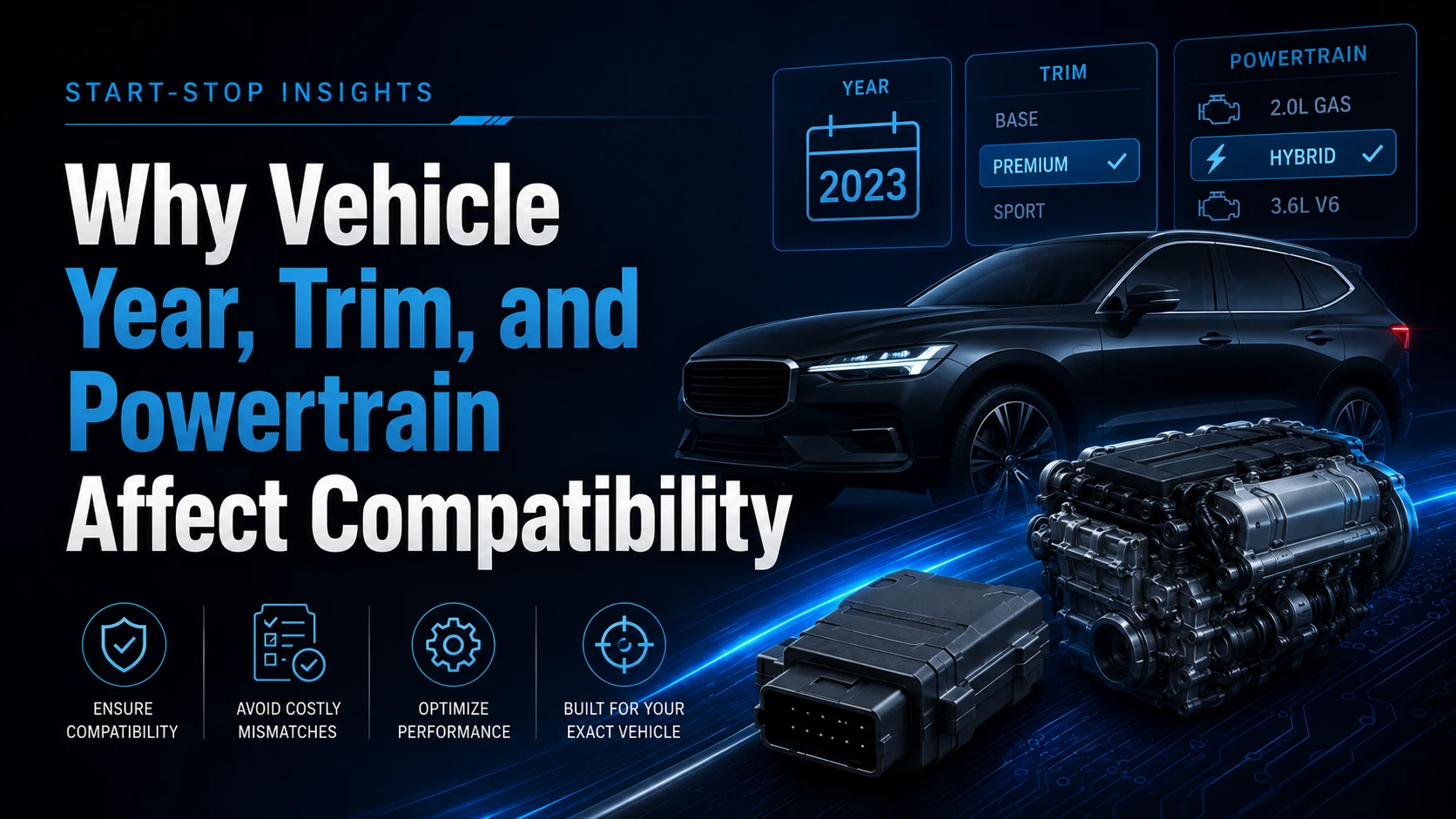
- The product specifically lists the vehicle make, model, and year;
- The product supports the correct powertrain;
- The connector and installation location match the product instructions.
How to Identify the System in Your Vehicle
The most obvious sign is usually a button marked with:
- “A OFF”;
- “ESS OFF”;
- “ISG OFF”;
- A circular arrow surrounding the letter “A.”
The instrument cluster may also display messages such as:
- Auto Stop;
- Engine Stopped;
- Stop/Start Ready;
- ISG Active;
- Auto Start-Stop Unavailable.
The owner’s manual remains the most reliable source for identifying the system used in a specific vehicle.
Call to Action:
Use [Vehicle Search Link] to locate the correct ESS, ISG, or Auto Start-Stop module for your vehicle.